Are you and your family tired of the same old dinners? Looking to add a bit of excitement to your culinary repertoire? Well, you’re in luck! Today, we’re exploring fusion cuisine, specifically focusing on how to incorporate Asian flavours into traditional Western dishes. This isn’t about completely overhauling your favourite recipes, but rather enhancing them with exciting new tastes that will tantalise your taste buds.
The Art of Fusion Cooking
Fusion cuisine isn’t a new concept but it’s one that continues to evolve and excite food lovers around the globe. By combining elements from different culinary traditions, we can create dishes that are greater than the sum of their parts. When it comes to mixing Asian and Western flavours the possibilities are endless.
Essential Asian Ingredients
Before we start cooking, let’s take a look at some key ingredients that can help you infuse Asian flavour into your dishes:
- Soy Sauce: A staple in many Asian cuisines, soy sauce adds depth and umami to any dish.
- Ginger: Fresh ginger brings a spicy, aromatic quality that’s quintessentially Asian.
- Garlic: While used in both Western and Asian cooking, garlic is particularly prominent in many Asian dishes.
- Sesame Oil: This fragrant oil adds a nutty flavour that’s characteristic of many East Asian dishes.
- Rice Vinegar: Milder than Western vinegars, rice vinegar adds a subtle tang to dishes.
- Chinese Salt: This flavourful seasoning blend can add complexity to your dishes.
- MSG (Monosodium Glutamate): Different to Chinese salt, MSG is a flavour enhancer that intensifies the savoury umami taste in foods.
Fusion in Action: Recipe Ideas
Now, let’s look at some practical ways to incorporate Asian flavour into Western dishes:
1. Asian-Inspired Roast Chicken
Instead of your usual herb-roasted chicken, try rubbing your bird with a mixture of five-spice powder (more on that later…), honey and soy sauce before roasting. The result? A beautifully bronzed chicken with a complex, slightly sweet Asian flavour that’s sure to impress.
2. Ginger and Soy Glazed Carrots
Give your side dishes an Asian twist by glazing carrots with a mixture of ginger, soy sauce and a touch of honey. This simple change can transform a basic side into something special.
3. Miso-Butter Steak
For a truly luxurious fusion experience, try topping your perfectly cooked steak with a pat of miso butter. The savoury umami of the miso complements the rich flavour of the beef beautifully.
4. Asian Flavour Pasta
Who says pasta has to be Italian? Try tossing your favourite pasta with a sauce made from soy sauce, sesame oil and a splash of rice vinegar. Add some stir-fried vegetables and you’ve got a quick and delicious fusion meal.
5. Wasabi Mashed Potatoes
Give your mashed potatoes a kick by mixing in some wasabi paste. The heat of the wasabi pairs surprisingly well with the creamy potatoes, creating a side dish that’s anything but boring.
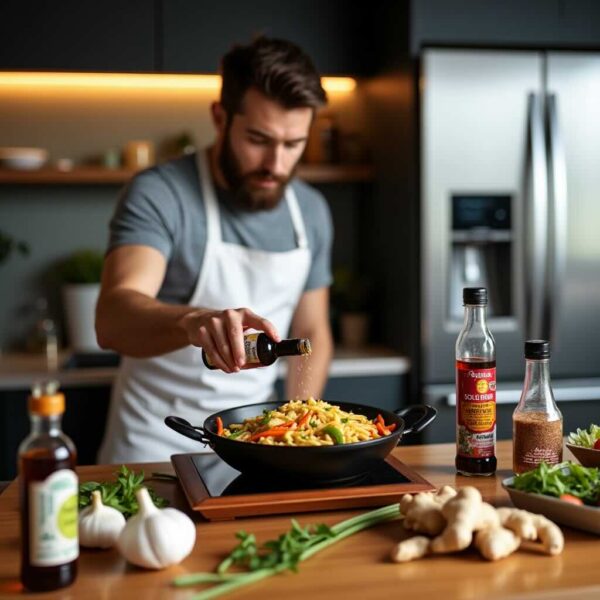
The Secret Weapon: Five-Spice Powder
One seasoning that can really help you achieve that authentic Asian flavour is 5 spice powder. This aromatic blend typically includes star anise, cloves, Chinese cinnamon, Sichuan peppercorns and fennel seeds. Its complex flavour profile brings warmth, sweetness and a hint of numbing spiciness to dishes.
Try adding a pinch of five spice powder to your meat rubs, sprinkle it over roasted vegetables or use it to season a stir-fry. It’s particularly lovely with pork and duck, but can also add depth to vegetarian dishes. A little goes a long way so start with a small amount and adjust to taste. This versatile spice blend can transform ordinary Western dishes into exciting fusion creations, making it a must-have in your culinary arsenal.
Tips for Successful Fusion Cooking
- Start Small: Begin by adding one or two Asian ingredients to your favourite recipes. This allows you to gradually build your palate and understanding of how flavours work together.
- Balance is Key: When combining flavours from different cuisines, it’s important to maintain balance. You don’t want any one flavour to overpower the others.
- Experiment: Don’t be afraid to try new combinations. Some of the best fusion dishes come from unexpected pairings.
- Respect the Original: While fusion is about creativity, it’s important to respect the original dishes and cultures you’re drawing inspiration from.
- Use Quality Ingredients: The better your ingredients, the better your final dish will be. This is especially true when working with new flavours.
Embracing Asian Flavour in Your Kitchen
Incorporating Asian flavour into Western dishes is a fantastic way to expand your culinary horizons. Whether you’re adding a dash of soy sauce to your gravy, sprinkling Chinese salt over your roast potatoes or completely reimagining a classic dish with Asian ingredients, you’re participating in a long and delicious tradition of culinary fusion.
Cooking is an art as much as it is a science so feel free to adjust recipes to suit your taste and don’t be discouraged if your first attempts aren’t perfect. With time, practice and experimentation you’ll soon be creating delicious fusion dishes that blend the best of both worlds.
Blending Asian flavours with Western dishes can lead to exciting culinary discoveries. It doesn’t require a complete overhaul of your cooking style – just a willingness to try new ingredients and combinations. As you experiment, you’ll likely find ways to enhance your favourite recipes with a touch of Asian flair. The world of fusion cuisine is vast and varied, offering endless possibilities for those willing to explore it.